Advanced AI: how to craft a real tone of voice for your content
Creating content with AI is fast, efficient, and... surprisingly awkward. One of the biggest headaches? Getting the tone of voice right. Not just any tone—your brand’s tone. The kind that actually sounds like you (or your company) and doesn’t come off like it was written by a robot wearing a suit.
So how do you teach AI to sound like you? Let’s break it down. Start with the basics:
- What's your tone of voice?
- What channel are you using?
- Who are you even talking to?
Once you sort those out, you’re halfway to building prompts that don’t feel flat or generic. Let’s dig into how to actually do that—without hiring a consultant or burning hours rewriting bland AI copy.
Who am I?
I think one thing worth checking is your internal brand book. In that PDF file, you’ll find how the brand wants to communicate with its customers: what its values are, how brave, formal, or cool it aims to be.
But here’s the catch. If we think of the brand as ourselves and the customer as a friend, we probably perceive ourselves differently than they perceive us. I might identify as brave because I can speak in public now, while my friend might see that as totally normal. I might think I’m sporty because I go to the gym three times a week (lie), but to most people, being sporty means playing competitive sports. There’s a clear gap between how we see ourselves and how others see us.
It’s not very effective to describe who we are just from our internal perspective—we need a third party to analyze our tone of voice. Since we’re not going to hire a consultant, ChatGPT itself should be the one to describe our communication style. But describe what, exactly?
How to describe our tone of voice
Our communication is made up of more than just "style and tone." There are many different variables, and again, we need to ask the tool what information it needs to complete the task. ChatGPT told me it would need the following:
- Formality Level – Should the email sound professional, semi-formal, or casual
- Personality – Is the tone warm, friendly, authoritative, or neutral?
- Word Choice – Should the language be simple and direct or sophisticated and detailed?
- Sentence Structure – Should sentences be short and to the point, or more expressive and engaging?
- Punctuation & Formatting – Will exclamation marks, emojis, or bold text be used to emphasize points?
- Use of Jargon – Should industry-specific terms be used, or should the language be more accessible?
- Empathy & Politeness – How should the email convey understanding and respect
- Call to Action (CTA) Style – Should requests be direct ("Please submit by Friday") or softer ("It would be great if you could submit by Friday")?
Now that we know what to describe, we need historical examples of our communications. Not only will this help describe our tone of voice, but it will also improve prompt quality. Examples are important—they can lead to a 10–20% improvement in output.
This part is pretty manual. You’ll need to download all your past content and make it readable for AI. I managed to get 160 emails in JSON format.
AI is lazy and you pretend you don't know it.
I thought I could just push the JSON and tell ChatGPT to describe the tone of voice based on the real examples, and that would be it. But when I ran the prompt, I realized ChatGPT would only analyze the first 35 emails. Plus, dumping 35 lines into one conversation didn’t give great results.
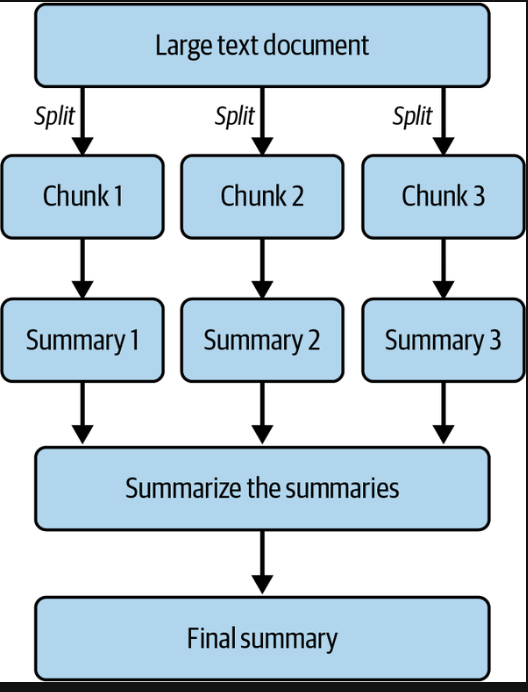
One valuable insight from Prompt Engineering for Generative AI: Future-Proof Inputs for Reliable AI Outputs is that it's easier for AI to analyze small chunks of text. One suggested approach was divide and merge.
So I created a Python script that split the emails every 40 lines and asked ChatGPT to describe the tone of voice based on those. After collecting around 4 summaries, I asked it to find the common themes and build a combined description, adding relevant examples.
If you follow this process using the attributes above, you’ll end up with an accurate tone of voice description and a lot of useful examples.
What we don't say
Remember the brand book PDF? Even if you don’t upload it to ChatGPT, it’s still useful. It probably includes examples to integrate into your summary—and also tells you what not to say.
If you sell donuts, maybe don’t pretend they’re healthy. If you work for a luxury brand, don’t frame it as cheap or convenient.
The prompt
In the end, your prompt might look something like this:
[You are a copywriter who needs to create content for X brand]

[Brand Description]

[Target Description]

[Tone of Voice Description]

**Formality Level**: The emails are structured yet maintain an approachable and conversational tone. They use contractions, engaging phrasing, and occasional emojis, making them friendly while still professional.

Example 1, 2, 3, 4

**Personality**: etc…

[What You Don’t Say]
Notes:
1. Don’t say we are healthy
2. Don’t say our products are miraculous
Let’s Chat
I hope you enjoyed the article and got some useful ideas for your own implementation! Let me know your thoughts—I’m curious to hear how you’d approach it!